North East Training, Research and Advocacy Foundation (NETRA)

North East Training, Research and Advocacy Foundation (NETRA)

An independent, policy-driven research institute committed to the inclusive and sustainable development of North East India

April 2026

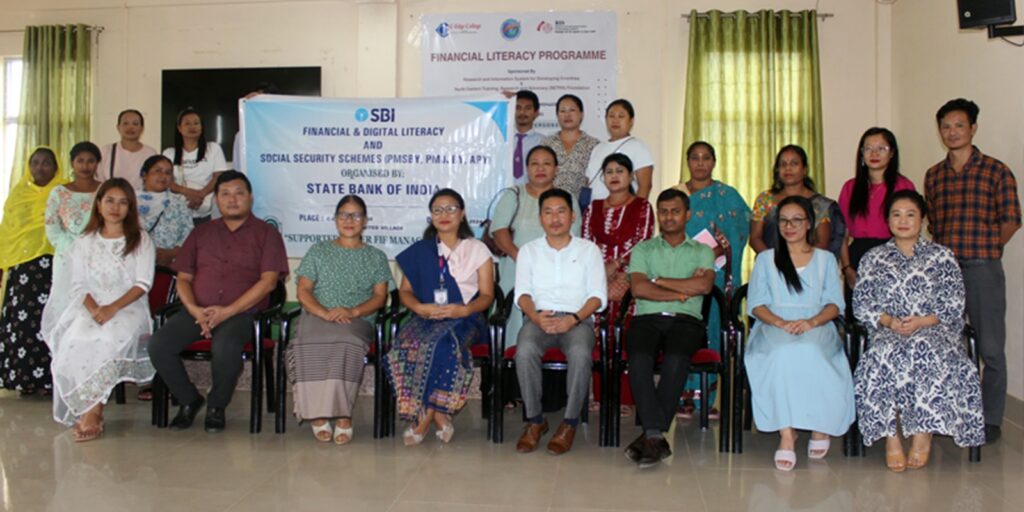
C-Edge College promotes financial literacy among homemakers

The Research Committee of C-Edge College (CEC) organized an awareness programme on financial literacy on 20 August, aimed at enlightening homemakers on the importance of financial planning. The event was sponsored by the Research and Information System for Developing Countries (RIS) and the North Eastern Training Research and Advocacy (NETRA) Foundation. T Lhingneikim, Manager of Financial Inclusion at SBI Regional Business Office, Dimapur, Nagaland, and Shiva Prasad Dey, Assistant Professor of Management Studies at C-Edge College, were the resource persons for the event. The program consisted of two sessions. During the first session, Lhingneikim spoke on the topic “Financial Literacy for Homemakers.” She emphasized the significance of setting financial goals and focused on various government-sponsored schemes, highlighting the benefits of availing of such schemes. In the second session, Shiva Prasad Dey discussed “Investment Avenues,” explaining the options available for investors and illustrating how a small investment can grow in tandem with the market. A total of 18 participants, including homemakers and SHG groups from the Naga United area, attended the programme. The event was successfully coordinated under the guidance of Dr Moameren Pongen, Assistant Professor at St. Joseph University, Chumoukedima, Nagaland, who served as the convenor, and Yimwapangla, Assistant Professor at CEC, along with Shiva Prasad Dey, Assistant Professor at CEC, as coordinators. The entire program was presided over by Yajennaro, Assistant Professor of Sociology at CEC, and the Welcome Address was delivered by Dr Chubatola Aier, Principal of CEC, Naga United. Overall, the Financial Literacy Program for Homemakers was a significant success in providing participants with valuable insights into financial planning and investments, an update received here said.

C-Edge College promotes financial literacy among homemakers Read More »

Events

Webinar on Issues and Challenges of Localisation of Sustainable Development Goals (SDGs)

The 8th webinar in the series focussing the issues and challenges of SGD localisation in the state of Manipur is conducted on August 22, 2020. The Research and Information System (RIS) for Developing Counties of the Ministry of External Affairs, Government of India, New Delhi and the North East Training, Research and Advocacy (NETRA) Foundation, Guwahati in collaboration with the Region Centre of Indira Gandhi National Tribal University, Manipur as knowledge partner organised the webinar. The introduction to the 8th webinar as well as address of welcoming to the panellist and the participants are given by Dr. Durga Chetri, Vice President of NETRA Foundation. While introducing the webinar theme, he welcomed the Chairperson of the webinar sessions Ambasadar Bhaskar Balakrishnan, Science Diplomacy Fellow, RIS for Developing Countries, New Delhi. He introduces also the panelists of different sessions namely; Professor E Bijoykumar Singh, Department of Economic, Manipur University, Smt. Kulka Rani Devi, Joint Director, Department of Planning, Government of Manipur, Mrs Thingreiphi Lungharwo, Executive Secretary, Mountain Indigenous Knowledge Centre, Manipur, Dr. N Surjitkumar, Head, Department of Tribal Studies, Indira Gandhi National Tribal University, Regional Campus, Manipur and formerly visiting scholar, University of Witwatersand, Johannesburg, South Africa, Dr. Kanak Haloi, President NETRA Foundation & Retd. Professor and Head, NIRD&PR, NERC, Guwahati besides Dr. Jayanta Choudhury, General Secretary, NETRA Foundation. Also he welcomes all participants for their keen interest exhibited by way of taking part in the webinar. Professor E Bijoykumar Singh in his presentation on inclusive development issues in localisation of SDGs in Manipur highlighted various confronting aspects of development which the smaller state like Manipur faces with. Non availability and inappropriateness of data are other type difficult challenges which the state encountered. Also he highlighted the progress of commendable nature in number of indicators which resulted to the attainment of 6th positions among all the states in the country while on account of performance in the areas like poverty, hunger, health and wellbeing etc things are not encouraging. While speaking about the measures that are required to address the issues, he enumerated the need of coordinated actions particularly among four actors namely; the planning board, planning department, directorate of economics and statistics and the SDG cell of the state. The other areas requiring action are the production system in rural area and the monitoring system which need strong support and strengthening towards attainment of inclusive growth. Kulka Rani Devi presented and discussed about the implementation status of SDGs in the state. She enlisted thoroughly the tasks accomplished like the vision document, indicator framework, and constitution of sectoral committee and inter departmental groups besides the involvement of district administration, awareness generation among the departments and the NGOs etc in SDG localisation in the state. Besides, she also highlighted about the implementation of the special programme like “Go To Village Mission” along with the achievement made in multiple nature supporting the inclusive growth and development of the state. On gender issues related to localisation of SDGs, Mrs Thingreiphi Lungharwo presented the scenario of women participation in the state. Women in Manipur although looks empowered in general, various suffering which women experience as a result of the continuity of the armed forces act are also highlighted. According to her the state still need to work hard on the issues of political participation, and the gender participation in higher education and work inviting necessary initiatives to address them. Dr. Surjitkumar in his presentation on SDGs and tribal development in Manipur: problems and prospects outlined various aspects of tribal development in the state besides the implementation as well as the achievements of MGNREGS. While enumerating the positive contribution these programmes unleashed in the state, he suggested the need for strong monitoring system for improved and inclusive development of the state. Professor Kanak Haloi in his presentation on local government and localisation issues of SDGs in Manipur outlined the status of three types of local governments in the state i.e. Village Authority and District Council in six hilly districts, PRI in four valley districts and local bodies for urban areas like Municipality Corporation, Municipality Council, Nagar Panchayat and Town Committees followed by the status of empowerment of the local bodies in terms of functions, funds and functionaries and lastly the participation of the local government system in the implementation of development programmes. The state according to has strong base of local government systems to carry fourth the agenda of decentralised development. The opportunities of local government are missed so far and this needs to be attended seriously and empower them to reap the benefit of decentralised development and inclusive growth. In the question & answer session, few questions came up on the part of the participants which concerned panellist aptly clarified. Ambasadar Bhaskar Balakrisnan in his concluding remark as session Chairperson provided first a summary of the all the presentations. In his concluding remark he stated that towards the larger benefit of the humanity in general and the state in particular, the decisions and actions of the state governments are the key for reaching the SDG agenda by 2030. The problem like data gap, unemployment, poverty, road connectivity and the gender inequality in education, employment, political participation although are of common in nature in most of the Indian state, the state at the same time need to emulate the example of better state and make progress by attending the gap areas towards attainment of higher level of inclusive growth. At the end, DR. Jayanta Choudhury, General Secretary of NETRA offers the formal vote of thanks to all panellists, participants and to RIS for making the event a successful one.
Webinar on Issues and Challenges of Localisation of Sustainable Development Goals (SDGs) Read More »

Events

Two-day workshop on effective academic writing begins at RGU

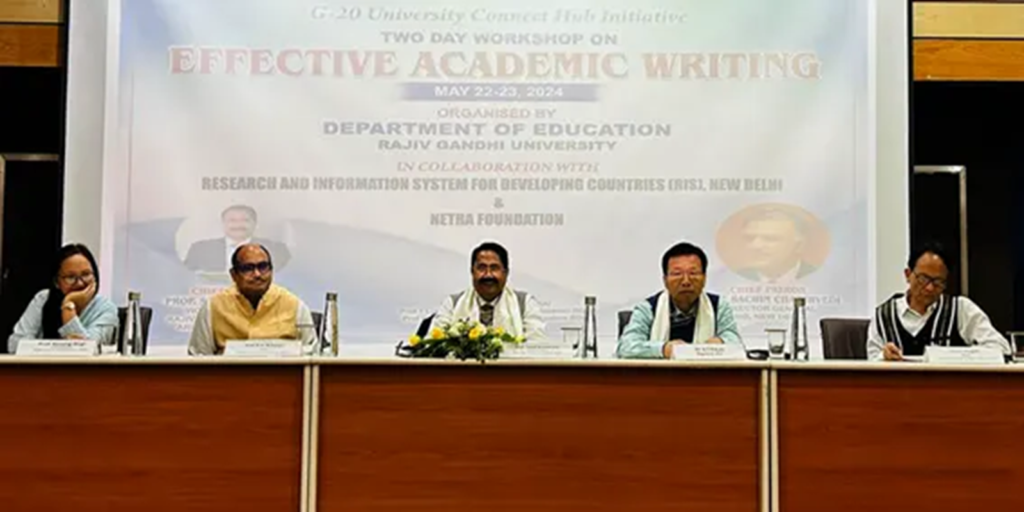
RONO HILLS, 22 May: A two-day workshop on ‘Effective Academic Writing’ began here at the mini auditorium of the Rajiv Gandhi University (RGU) on Wednesday. The workshop of the ‘G20-University Connect Hub Initiative’ was organized by the RGU’s education department in collaboration with Research and Information System for Developing Countries (RIS), New Delhi and NETRA Foundation. Addressing the inaugural function, RGU vice chancellor prof. Saket Kushwaha commended the efforts made by workshop coordinator prof. Kesang Degi for the G-20 University Connect Hub initiative in RGU “which is among 53 Universities that are currently funded.” Reflecting on the essential elements of thesis, specifically on outcomes of research, the VC exemplified various types of research in different streams. The VC said that “every researcher should be well acquainted with research design in regard to cross-sectional and time-series researches.” Stating that researcher should know all the dynamics of research, he shared his experience of using “punch cards” in research process during his tenure in Africa. The VC also opined that researchers and educators should have a diploma or degree in journalism and education as well. Addressing the gathering, faculty of education and sports science dean prof. T. Lhungdim said that the workshop was important for all the research scholars for writing qualitative research articles. RGU registrar Dr. N.T Rikam stated that the workshop would be beneficial specifically, for research scholars. “It is fortunate for the RGU to be one of the universities among the 21 universities which are associated with G-20 University Connect Hub Initiative,” he said. There are six resource persons for the workshop including prof. J.V Madhusudan, Dr. Shankar Thappa and prof. C. Sivashankar. More than 150 research scholars and teachers from RGU-affiliated colleges, RGU and colleges in Assam are participating in the workshop. Among others, RGU’s head of education department prof. P.K Acharya and workshop coordinator prof. Kesang Degi were present in the inaugural function.

Two-day workshop on effective academic writing begins at RGU Read More »

Events

RIS, NETRA experts dwell on Issues, Challenges of localizing SDG in Meghalaya

“The success of sustainable Development Goals should be on localising the goals”, said Prof Amitabh Kundu, Distinguish Fellow, RIS, New Delhi& former Professor & Dean, JNU in the 5th Webinar Lecture Series on “Localising Sustainable Development Goals: Perspectives from North East India” under the theme of “Issues & Challenges of localizing SDG in Meghalaya” organised by Research and Information System for developing Countries (RIS) & North Eastern Training, Research and Advocacy Foundation (NETRA) in knowledge partnering with the Department of Rural Development, University of Science & Technology Meghalaya on August 1, 2020. Dr Bamin Tada, Former Advisor (Health), NEC, Meghalaya presented on the health and wellbeing issues in localising SDGs in Meghalaya where he spoke on the importance of health as one of the primary indicators of global goals and how significant it is to make a progress in the health infrastructure in the state of Meghalaya. Dr P S Nianglang showed the different initiatives adopted by the state government towards localisation of SDG in district level, block level and village level. The 5th goal of SDG was focused by Dr Deigracia Nongkynrih, Assistant Professor of Department of Economics, NEHU where she presented on the gender issues related to localisation of SDGs in the state of Meghalaya by clearly mentioning that although Meghalaya is known for its matrilineal society yet the participation of women in political administration is very less which itself pose a question on the gender equality issue. To identify the local goals and substantiate towards the global goals was highlighted by Dr Papiya Dutta, Associate Professor, Department of Rural Development of University of Science & Technology, Meghalaya. She presented on the importance of capacity building of the local self government and empowering the local administration will pave the path towards the achievement of SDG. Even the civil societies are the stakeholders in realising the global goals and the strategies adopted by the CSO in the state of Meghalaya was well discussed by Miss Mayfereen Ryntathiang, President of Grassroot , Shillong. The lecture was concluded by Dr Kanak Haloi, President of NETRA with an optimistic view of minimising the gap between the global goals and local goals for the state of Meghalaya with a vote of thanks offered by Dr Jayanta Choudhury, Secretary of NETRA.

RIS, NETRA experts dwell on Issues, Challenges of localizing SDG in Meghalaya Read More »

Events

NETRA team participates in T20 prog

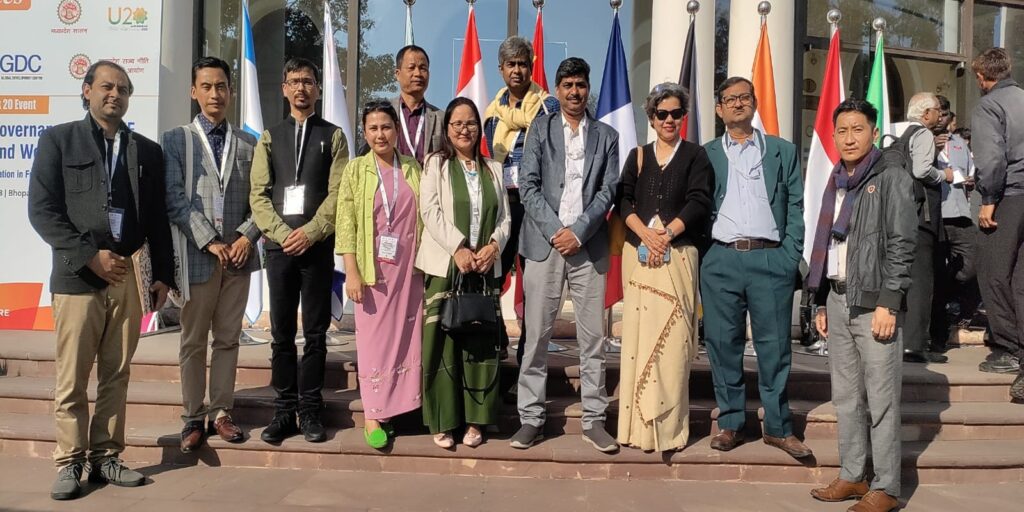
BHOPAL, 22 Jan: An 11-member team of the North Eastern Training, Research & Advocacy (NETRA) Foundation, representing the eight states of the Northeast, participated in a two-day think-tank 20 (T20) programme on ‘Global governance with life, values and wellbeing: Fostering cooperation in framework, finance and technology’, as part of the G20 process in India, on 16 and 17 January, here in Madhya Pradesh. The event, which was attended by around 400 participants from 43 countries, was inaugurated by MP Chief Minister Shivraj Singh Chouhan. During a special interactive session with the delegates, NETRA Foundation secretary-general Dr Jayanta Choudhury spoke about the activities of the NETRA Foundation, especially with regard to localisation of SDGs of the NE region. He emphasised on the importance of capacity building of different stakeholders and strengthening of the existing local level institutes of Northeast India. Tripura University’s Economics Professor Subhrabaran Das highlighted the strengths and weaknesses of the Northeast region, while Gauhati University’s Women’s Studies Professor Polly Vauquline spoke on the topic ‘Women and youth led development’, during which she highlighted issues such as gender inequality in the country, gender-based violence, “and the need to generate data on women.” Meghalaya Administrative Training Institute Assistant Director Ivyreen Warjri, during the session on ‘One health, wellness and traditional medicine’, said that “traditional medicine is knowledge developed over generations. However, there are issues with certification and registration of practitioners in the country.” IIT Guwahati Associate Professor Dr Harsh Chaturvedi emphasised on “collaborative mechanism for joint technology development and IP sharing and development of technologically viable, economically feasible and ecologically responsible methods for implementation of SDGs.” The NETRA Foundation has been selected as the knowledge partner to coordinate the G20 ‘university connect’ programme in eight NE universities identified by the external affairs ministry. The universities are Rajiv Gandhi University, Arunachal Pradesh; Indian Institute of Technology, Guwahati; Dibrugarh University, Assam; Manipur University, Imphal; North Eastern Hill University, Meghalaya; Mizoram University, Aizawl; St Joseph University, Nagaland, and Tripura University, Agartala. RGU was represented by its Education Professor Kesang Degi.

NETRA team participates in T20 prog Read More »

Events